Research Areas
We study light–matter interactions: we use light to understand matter—and we use light to control it. Our research spans from fundamental dynamics to sensing devices, combining ultrafast spectroscopy with quantum technologies.
The laboratory runs several experimental programmes: quantum sensing with NV centers in diamond, ultrafast time-resolved spectroscopy of photosynthesis, spectroscopy of quantum dots, and nanocharacterization of biological interfaces.
Quantum sensing with NV centers in diamond
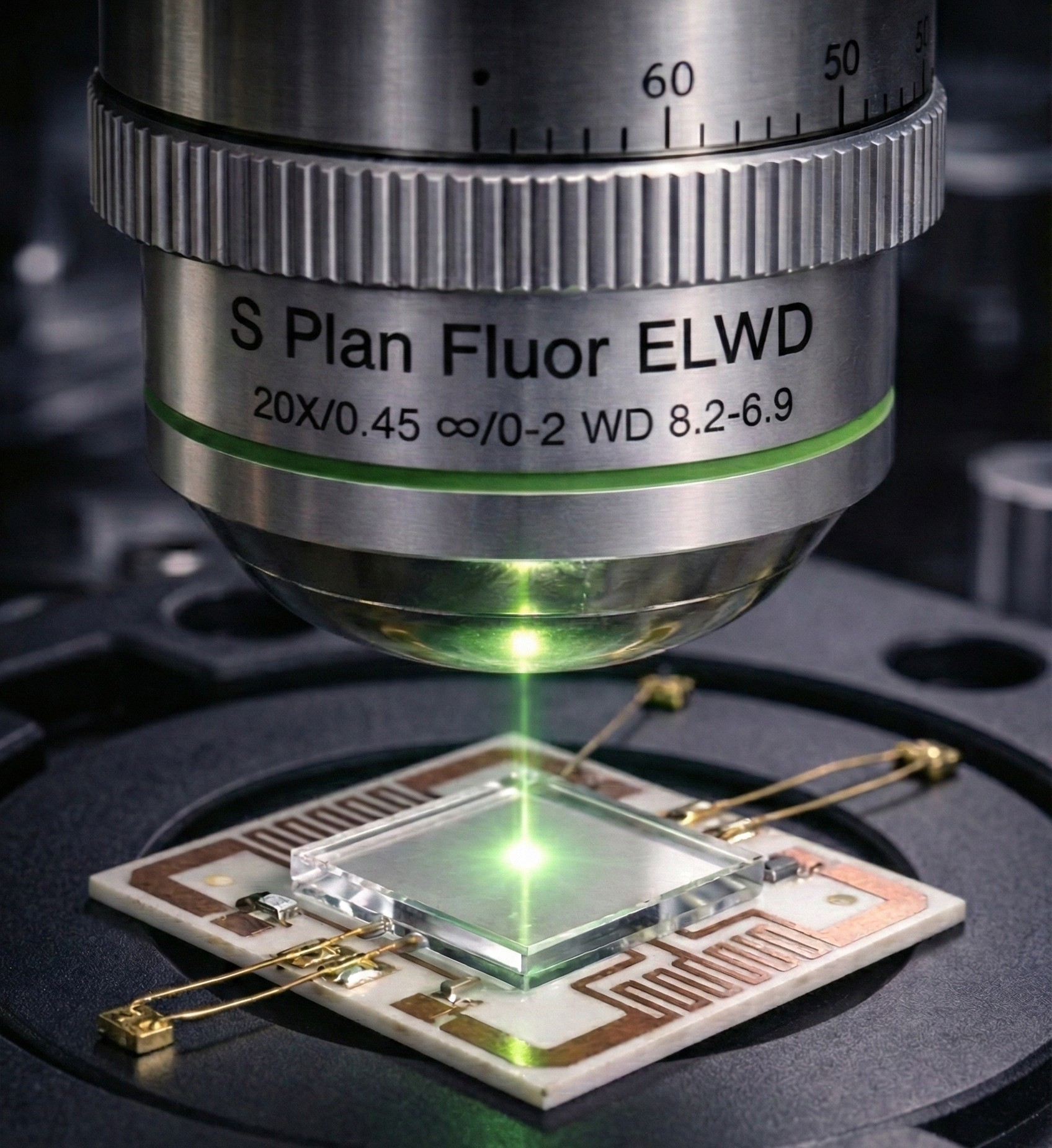
We develop diamond quantum sensors based on nitrogen-vacancy (NV) centers for magnetometry and micro-NMR, targeting applications from materials characterization to chemical and biological analysis.
A key focus is surface spin physics — understanding and engineering the diamond surface environment to improve sensitivity, stability, and device performance, enabling pathways toward chip-scale sensors.

Nanocharacterization laboratory
Our laboratory concentrates on interactions between nanoparticles and nanostructured materials with the biological environment. Our primary tool of exploration is atomic force microscopy combined with micro-spectroscopy.
Due to the nature of our research, we work at the intersection between physics, chemistry, and biology, leading to a broader research topic portfolio.

Ultrafast time-resolved spectroscopy of photosynthesis
Using femtosecond spectroscopic tools, we probe energy flow in photosynthetic systems to reveal energy-transfer pathways and identify design principles that inform artificial light-harvesting approaches.
Spectroscopy of quantum dots
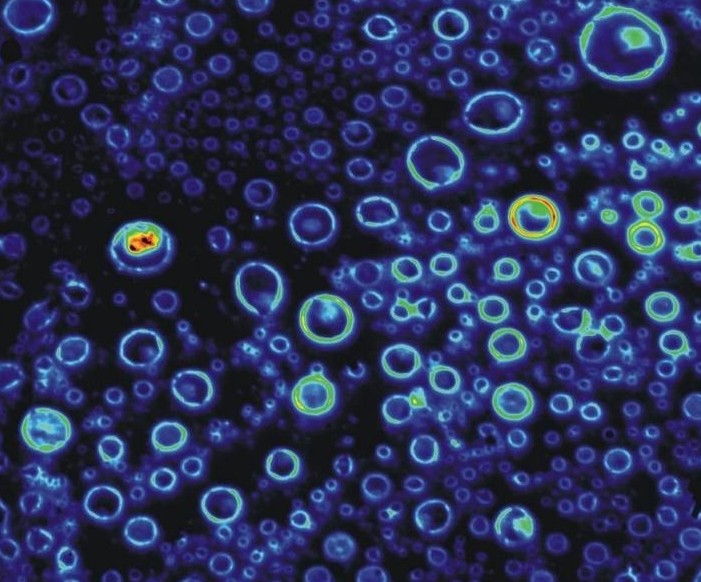
We use microspectroscopy to study quantum dots at the single-particle and ensemble level, in both films/solid hosts and colloidal solutions.
Complementary optical radiometry provides traceable, quantitative emission metrics (brightness and efficiency) needed for benchmarking. This combination connects photophysics to practical emitter performance for quantum and optoelectronic applications.